
Cotton vs Polyester for Clothing Manufacturing
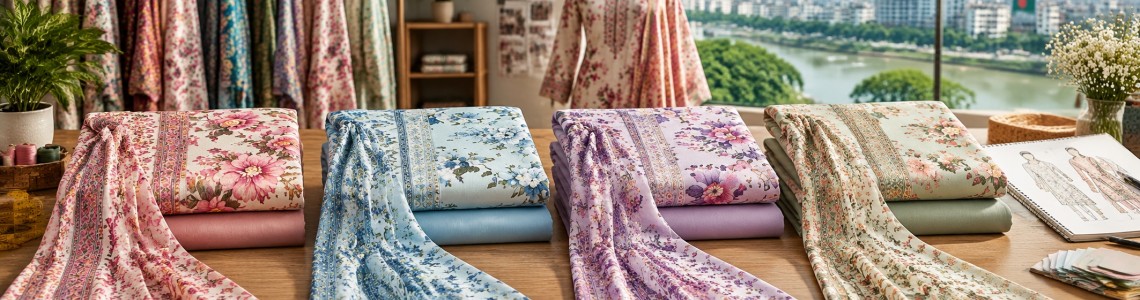
Fiber choice affects almost everything downstream in a clothing line — how the fabric prints, how it wears in different climates, what it costs at scale, and how customers experience the finished garment. Here's a practical comparison of cotton, polyester, viscose, and cotton-poly blends for buyers deciding what to manufacture in.
On This Page
Breathability and Climate Fit
100% cotton remains the most breathable option of the group, making it the default choice for hot-climate markets across the Gulf and South Asia. Polyester traps heat and moisture against the skin far more than cotton, which is why it's a weaker fit for warm-climate daily wear despite its cost and durability advantages. Viscose sits between the two — softer and more breathable than polyester, though it doesn't quite match cotton's performance in sustained heat. Cotton-poly blends aim for a middle ground, trading some breathability for added durability and reduced cost.
"The right fiber depends on where your customer lives and wears it, not on which fabric is cheapest to source."
Cost at Scale
Polyester is generally the least expensive of the group at volume, followed by cotton-poly blends, with 100% cotton and viscose typically priced higher due to raw material and processing costs. That said, the price gap narrows considerably depending on cotton grade and sourcing region — Bangladesh's established cotton textile base, covered in Trativaa's import buyer's guide, keeps cotton more cost-competitive here than in many other sourcing markets.
Print Quality by Fiber Type
Cotton takes digital print ink cleanly and holds color well after washing, which is a large part of why it's the standard base for detailed digital prints — see Trativaa's digital print collection for examples of this in practice. Polyester requires a different ink process (typically sublimation) to print well, which isn't always compatible with the same equipment used for cotton, so confirm with your supplier which fiber their printing process is actually set up for before specifying polyester for a detailed print design.
Durability and Care
Polyester resists wrinkling and holds shape through repeated wear better than pure cotton, which softens and can lose crispness over many washes. Cotton-poly blends aim to capture some of that durability while keeping more breathability than pure polyester. For fabric weight considerations alongside fiber choice, Trativaa's GSM guide covers how weight and fiber together affect how a fabric performs long-term.
Quick Comparison Chart
| Fiber | Breathability | Relative Cost | Print Suitability |
|---|---|---|---|
| 100% Cotton | Highest | Mid-high | Excellent for digital print |
| Cotton-Poly Blend | Medium | Mid | Good |
| Viscose | Medium-high | Mid-high | Good |
| Polyester | Low | Lowest | Requires sublimation printing |
Source the Right Fiber for Your Market
Cotton digital print fabric built for warm-climate markets and detailed prints.
View Export DetailsFrequently Asked Questions
Is cotton always the better choice than polyester?
Not always — it depends on climate, budget, and print detail needs. Cotton wins on breathability and print quality; polyester wins on cost and wrinkle resistance.
Can polyester be digitally printed the same way as cotton?
Not with the same process — polyester typically requires sublimation printing, which uses different equipment than cotton digital printing. Confirm with your supplier which fiber their setup supports.
Are cotton-poly blends a good compromise?
Yes, for buyers wanting more durability than pure cotton without fully losing breathability — though they sit in the middle on nearly every measure rather than excelling at any one.
There's no universally "best" fiber — the right choice depends on your target market's climate, your price point, and how detailed your prints need to be. For hot-climate markets and detailed digital prints specifically, cotton remains the strongest overall fit.
Cotton Vs Polyester For Clothing Manufacturing Fabric Fiber Comparison Cotton Poly Blend Viscose Vs Cotton Fabric For Print Quality
Leave a Comment