
Cotton Fabric GSM Guide: Choosing Weight for Wholesale
GSM — grams per square meter — is the single number that tells you the most about how a cotton fabric will actually perform once it's cut and sewn, yet it's one of the most commonly misunderstood specs in a wholesale fabric order. This guide covers what GSM actually measures, typical ranges by fabric type, and how to choose the right weight for your product.
On This Page
What GSM Actually Measures
GSM is exactly what it sounds like — the weight, in grams, of one square meter of the fabric. It's a direct, physical measurement rather than a marketing term, which makes it one of the more reliable specs to compare across different suppliers, as long as everyone is measuring the same way. Higher GSM generally means a denser, heavier, more structured fabric; lower GSM means lighter and more sheer.
"GSM won't tell you if a fabric looks good — but it will tell you almost everything about how it behaves."
Typical GSM Ranges by Cotton Fabric Type
| Fabric Type | Typical GSM Range | Feel |
|---|---|---|
| Voile | 60-100 GSM | Sheer, very lightweight |
| Lawn | 100-130 GSM | Light, crisp, breathable |
| Poplin | 120-150 GSM | Smooth, slightly firmer |
| Mid-weight cotton | 150-200 GSM | Structured, holds shape |
| Canvas / heavy cotton | 280+ GSM | Stiff, durable |
These ranges vary somewhat by weave and finishing, so always confirm exact GSM with your supplier rather than assuming from the fabric name alone.
Choosing GSM by End Product
For flowy dresses, kameez, and warm-climate garments, 100-150 GSM generally strikes the right balance of drape and durability — Trativaa's Signature Lawn collection sits at 80/80 count within this lighter range. For structured garments, outerwear, or anything needing more body, 150 GSM and above holds shape better through wear and washing. If you're deciding between fabric printing methods for your GSM range, Trativaa's printing methods comparison covers what pairs well with lighter versus heavier bases.
GSM vs. Thread Count — They're Not the Same Thing
GSM measures overall fabric weight; thread count measures how many threads are woven per square inch. A high thread count doesn't automatically mean a high GSM, and vice versa — a fine, tightly woven fabric can still be lightweight overall. When comparing suppliers, ask for both figures rather than assuming one implies the other, since buyers sometimes mistake a high thread count claim for a heavier, more durable fabric when it isn't necessarily true.
How to Verify a Supplier's GSM Claim
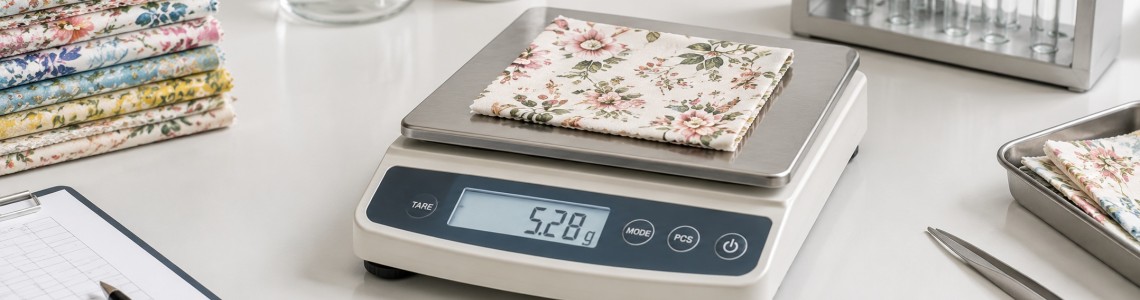
A simple digital fabric scale and a die-cut sample of known size (often 10cm x 10cm) is enough to verify GSM independently — weigh the swatch and calculate the per-square-meter equivalent yourself rather than relying solely on a supplier's stated figure. This is a quick, low-cost check worth doing on any sample before committing to a bulk order.
Request GSM Specs With Your Sample
Get exact fabric weight confirmed before you place a bulk cotton fabric order.
View Export DetailsFrequently Asked Questions
What GSM is best for lightweight summer clothing?
100-130 GSM, in the lawn range, is generally the standard for breathable, warm-climate garments that still hold structure.
Does higher GSM always mean better quality?
No — GSM should match the intended use. A high GSM on a fabric meant to drape softly would actually be the wrong choice, not a sign of superior quality.
Can I verify GSM myself without special equipment?
Yes — a basic digital scale and a known sample size is enough to calculate GSM independently, and it's a worthwhile check on any sample before a bulk order.
GSM is one of the few fabric specs you can verify objectively rather than taking on faith, and it's worth doing on every new supplier relationship — a quick check that can save a bulk order from arriving lighter or heavier than expected.
Cotton Fabric GSM Guide Fabric Weight Wholesale GSM Vs Thread Count Cotton Lawn GSM Bulk Fabric Buying
Leave a Comment