
Holud Dress for the Bride: Complete Styling Guide
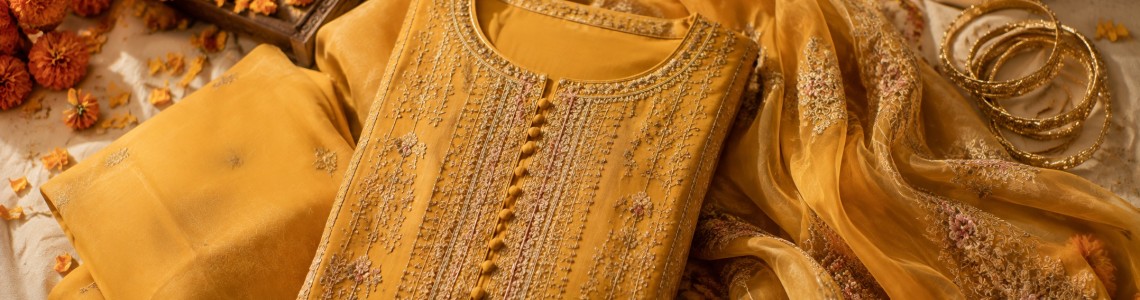
The bride's holud outfit has different priorities from anything else in the wedding wardrobe — it needs to survive turmeric and oil, stay comfortable through hours of sitting on stage, and still photograph beautifully. Here's how to choose color, fabric, and styling specifically for the bride, not the guests.
In This Guide
Traditional and Modern Color Choices
Mustard and turmeric-yellow remain the traditional holud colors, tying directly to the ceremony itself, but many brides today choose a softer marigold, coral, or even a warm blush instead — a nod to tradition without matching the turmeric paste exactly. Whatever the shade, it should sit clearly apart from your mehndi and wedding-day colors so the three events read as distinct in photos.
"The holud outfit only has to survive one event — dress for the ceremony you're actually in, not the one after it."
Fabric That Survives Turmeric and Oil
Holud involves turmeric paste and oil applied directly by guests, which makes fabric choice more practical than at any other wedding event — heavily embroidered or delicate fabrics stain and snag more easily, while a sturdier cotton or lawn in a rich, deep shade hides marks far better than a pale one. Trativaa's digital print three-piece collection and Signature Lawn collection both suit this need well — many brides intentionally choose a slightly simpler piece here and save embellishment for the reception. If you want a specific mustard or marigold shade designed exactly to your preference, Trativaa's custom print service is worth planning several weeks ahead.
Staying Comfortable for Hours on Stage
Brides typically sit for extended periods during holud, which makes a breathable, non-restrictive fit far more important than at the wedding ceremony itself. A slightly looser kameez and comfortable seated fit through the waist and hips matters more here than an especially fitted silhouette — comfort issues are much harder to fix mid-ceremony than at any other wedding event.
Coordinating Without Matching Bridesmaids
The bride's outfit should read as clearly distinct from the bridal party rather than coordinated in the same palette — a deeper or richer shade of the same color family usually works better than an identical print. For guidance on bridesmaid and guest dressing specifically, Trativaa's wedding season guide covers that side of the planning, and the wedding dress guide goes deeper into bridal fabric and budget more broadly.
Jewelry That Suits the Occasion
Floral jewelry — real or artificial garlands, bangles, and a simple maang tikka — is traditional for holud and considerably more comfortable for hours of sitting than heavy gold sets saved for the wedding day itself. Trativaa's accessories guide covers general jewelry pairing if you want a lighter gold option instead.
Design Your Holud Outfit
Choose from ready-made mustard and marigold pieces, or go fully custom.
Start Custom DesignFrequently Asked Questions
Does the bride's holud outfit have to be yellow?
No — mustard and turmeric-yellow are traditional, but marigold, coral, and warm blush are all common modern alternatives that still nod to the occasion.
Will turmeric stain permanently?
Turmeric can leave marks on light or delicate fabric, which is why many brides choose a sturdier cotton or lawn in a richer shade for this specific event rather than their most delicate piece.
Should the bride's holud outfit match the bridesmaids?
It's more common for the bride to wear a deeper or richer shade of a similar color family, rather than an identical outfit to the bridal party.
The holud outfit has one job — get the bride comfortably and beautifully through hours of turmeric, oil, and celebration — so prioritize fabric and fit here even more than embellishment, and save the most elaborate piece for the day it's actually meant for.
Holud Dress For Bride Mehndi Outfit Bride Bridal Holud Color Turmeric Stain Fabric Bride Styling Guide
Leave a Comment