
Hijab Styling Guide: Everyday to Formal Looks
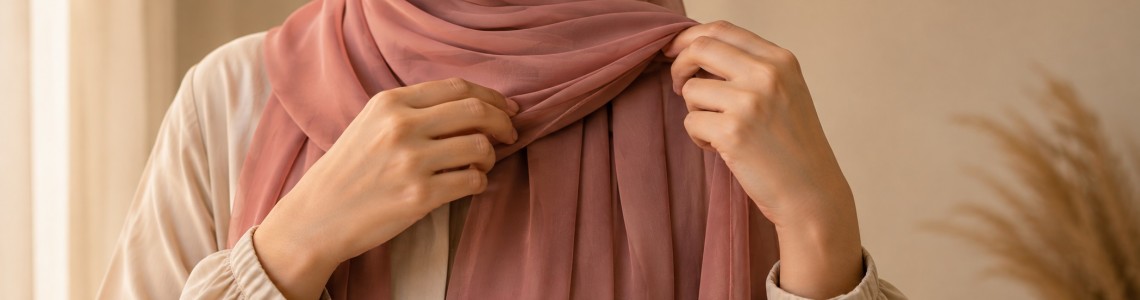
A great hijab style takes less time than most people expect once you know the actual folds and pins involved — the difference between a rushed everyday wrap and a polished formal drape usually comes down to two or three extra steps, not a totally different skill. This guide walks through three core styles you'll actually use, plus how to match hijab fabric and color to your outfit.
In This Guide
Choosing the Right Hijab Fabric First
Before any styling technique, fabric decides how easy a drape is to achieve and hold. Lightweight chiffon and crinkle fabrics hold a loose fold naturally with fewer pins, which is why they're behind most of the effortless-looking drapes popular right now. Jersey and modal-blend hijabs grip more and need fewer pins altogether, making them the most practical option for long days — worth pairing with breathable pieces like Trativaa's digital print three-piece collection for hot-climate wear.
"The right fabric does half the styling work before you've pinned a single fold."
The Everyday Wrap (2 Minutes)
This is the fastest, most practical style for daily wear and needs only one pin.
- Place the hijab on your head with one side noticeably shorter than the other, roughly a third to two-thirds.
- Pin the fabric securely under your chin, holding both layers together.
- Take the longer side and wrap it once around your neck, over the opposite shoulder.
- Tuck or pin the tail end at the shoulder, or let it drape naturally for a softer look.
The Instant Drape (For Long, Busy Days)
Best with jersey or modal fabric, this style uses the fabric's natural grip instead of pins, which makes it ideal for Ramadan, travel days, or anything where you're moving constantly.
- Drape the hijab evenly over your head with both sides level.
- Cross both sides under your chin, pulling gently to secure the grip of the fabric.
- Bring both ends up and over your shoulders, letting them rest without pinning.
- Adjust the front drape by hand rather than repinning if it shifts through the day.
The Formal Drape (For Events)
This style takes closer to five minutes but holds its shape through a full evening — worth the extra time for weddings, Eid, or receptions where you'll be photographed.
- Pin an inner cap or undercap first for volume and grip — this single step is what separates formal drapes from everyday ones.
- Place the hijab with one longer side, pin securely under the chin.
- Create soft pleats along the front hairline before pinning at the temple, rather than pulling the fabric flat.
- Bring the longer side up and over the top of the head for a layered, structured finish, pinning at the crown.
- Let the remaining length fall loosely at the back or shoulder rather than wrapping it tightly.
Matching Hijab Color to Your Outfit
A close tonal match — same color family, slightly different shade — tends to look more elevated than an exact match, which can flatten the whole outfit visually. For printed pieces, pull one secondary color from the print rather than the dominant one; Trativaa's print design collection is a good place to see this kind of color layering in action across different palettes. For embellished pieces like the embroidered three-piece, a plain hijab in a matching tone lets the embroidery stay the focal point.
Shop Outfits Built to Match
Prints and embroidery designed to pair easily with a range of hijab colors.
Explore the CollectionFrequently Asked Questions
How many pins do I actually need?
One pin is enough for the everyday wrap, none for the instant drape if you're using jersey or modal fabric, and two to three for a formal drape with pleating.
What hijab fabric holds up best in hot, humid climates?
Lightweight chiffon or crinkle fabrics breathe better than jersey in heat, though jersey holds its shape longer through a busy day — a reasonable trade-off depending on the event.
Should my hijab match my outfit exactly?
A close tonal match usually looks more elevated than an exact match. For printed outfits, pulling a secondary color from the print works better than matching the dominant shade.
Once these three drapes feel familiar, everything else is just variation — a looser front pleat here, a different pin placement there. Start with the everyday wrap, and build up to the formal drape once it feels automatic rather than something you're following step by step.
Hijab Styling Guide Hijab Drape Everyday Hijab Formal Hijab Style Hijab Fabric Matching Hijab Outfit
Leave a Comment